
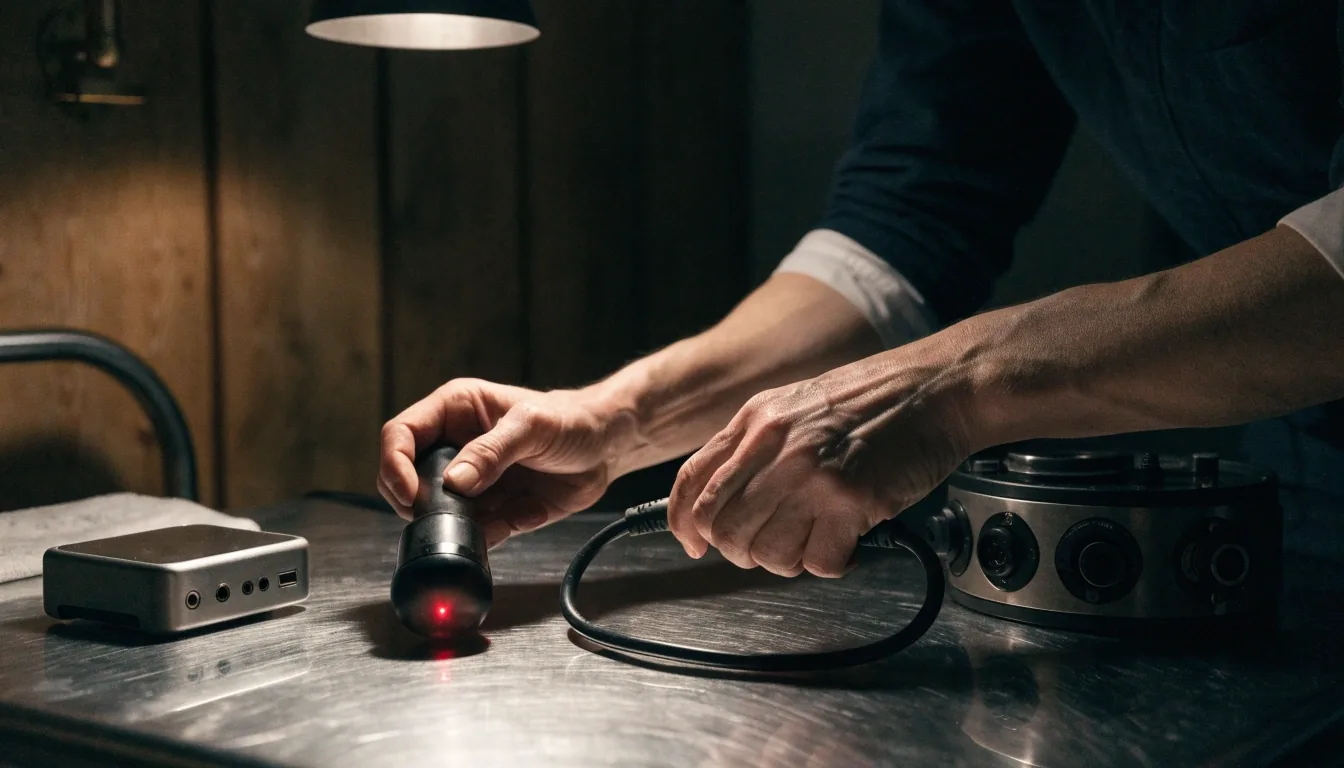
A handheld infrared wand, a belt unit, and a small panel device laid out on a clinic table

How to choose a joint therapy device

Most buying mistakes happen before the purchase. Work through treatment area, form factor, wavelengths and regulatory status in that order.

A guide in the order that actually matters Treatment area first Wavelengths published or not Clearance claim tied to a stated use

Start with the body area, not the brand

Before brand, before price, decide what you are treating. Knees, shoulders and elbows suit handheld devices you can aim directly. Backs and hips favor panels that cover a zone in one session. That single question eliminates most of the market, and it prevents the most common mistake: buying a device that cannot reach the area you care about.

Worth saying plainly — a device that fits your area and your routine beats a stronger one that sits in a cupboard. The rest of this guide is written in the order experienced buyers actually work: area, form factor, published wavelengths, regulatory status, routine, and only then price.

The short version

  • Knees, shoulders, elbows — a handheld you can aim.
  • Backs, hips — a panel that covers the zone in one session.
  • Published wavelengths make a device comparable.
  • A clearance claim names the use it was cleared for.

Then choose the form factor

Handheld, wearable, or panel. Handheld units such as the dpl Clinical XL are built for targeted, close-range use and travel easily. Panels such as the Joovv Solo 3.0 and the MitoPRO 1500 cover more skin but need space and a routine. TheraBody SmartGoggles shows the wearable lane, which targets relaxation rather than joint therapy.

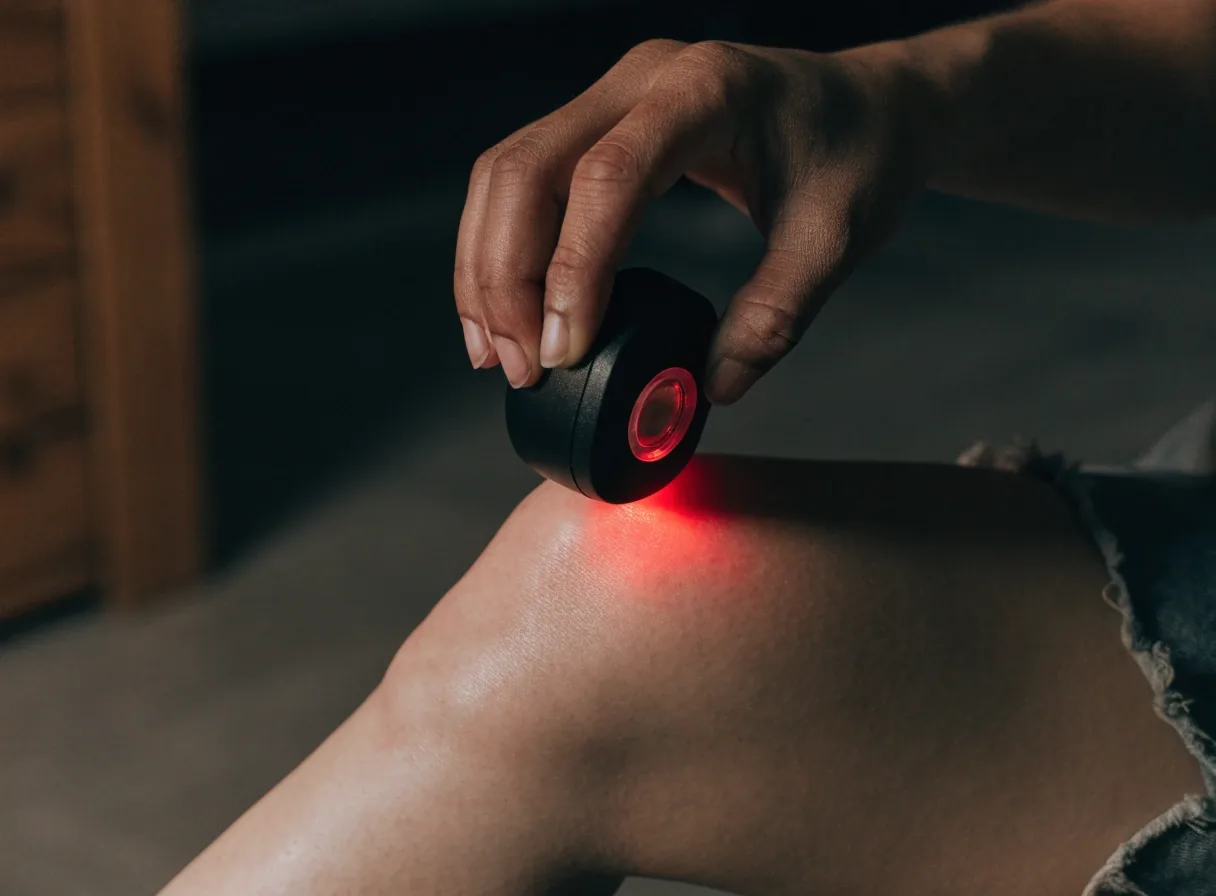
A hand holding a handheld infrared wand against a person's knee in a dim room

Handheld — aimed at one joint

Built for targeted, close-range use and easy to travel with. A handheld lives in a drawer, takes minutes per session, and lets you move from one knee to the other shoulder without changing your setup. The trade-off is coverage: you treat a joint, not a zone, so a back session becomes a long series of passes.

What to check: whether the seller publishes the wavelength pair, whether the emitter face is large enough for the joint you have in mind, and how the device is held in place if you want hands-free use.

Browse handheld devices

Wearable — relaxation and recovery, not joint therapy

TheraBody SmartGoggles sits in the recovery budget and the handheld shape family, but it targets relaxation. A legitimate product in its own lane — just not a joint device.

Device reviews

Panel — covers a zone in one session

Panels such as the Joovv Solo 3.0 and MitoPRO 1500 cover more skin at once, which suits backs and hips. In exchange they need a place to stand and a standing routine to match.

See panel and lamp devices

The market, cut open

Three lanes, one question each. Compare a device against the lane it belongs to before you compare it against a price.

Handheld and pain relief flashlights

Best when the treatment area is a single joint you can reach: knee, elbow, shoulder, wrist. Sessions are short and the device stores anywhere.

Watch for devices sold as pain relief flashlights that never state a wavelength. Without published figures you are comparing brand language, not light.

Lamp devices

A lamp aims light at one region from a short distance. It suits a fixed spot at home — a chair, a desk, the end of a sofa — where you sit still for a session.

Ask whether the distance and session length are specified. A lamp without a stated working distance leaves you guessing at dose.

Panels and larger body devices

Panels cover a whole zone in one pass, which is the practical answer for a back or hips. They need floor space, a power point, and a standing routine.

If the plan involves a spare room and ten standing minutes, a panel earns its place. If not, a smaller device you use daily wins.

Check the wavelengths before the wattage

Red and near-infrared are the two you will see most, often combined in one head. The Lumaflex Body Pro is built around both, and the CURAPOD uses visible red and infrared light. What matters is not which pair a seller chooses — it is whether the seller publishes figures at all.

A device that states its wavelengths lets you compare it against another device on the same terms. A device that does not leaves you with brand language alone, and no way to tell whether two products differ in any way that matters to your knee.

The second trap is wattage. A bigger number does not map to your treatment area, and it does not describe how the light is spread across the emitter face. Ask about the light that reaches the joint, not the power the device draws from the wall.

A red-lit emitter face resting against a forearm in near-darkness
Red and near-infrared combined Emitter face at arm's length Published figures are what make a comparison possible

What a spec sheet should state

Wavelength pair
The red and near-infrared figures the device emits, in nanometres.
Intended use
The purpose the seller ties the device to, in their own words.
Regulatory pathway
A clearance claim tied to a stated use, or an honest statement that there is none.
Session guidance
How long and how often the seller suggests using it, and at what distance.

Verify the regulatory status

Look for a specific clearance claim tied to a stated use — not words like clinical-grade or medical-grade, which describe tone rather than a pathway. The dpl Clinical XL states FDA clearance; many consumer wands state nothing at all.

An unstated pathway does not make a device useless. It changes what you are comparing. If a seller will not name a pathway, you are comparing marketing, and you should know that before you pay rather than after.

How to read a regulatory statement on a joint therapy device
What the seller says What it tells you What to do next
A clearance claim naming the use it was cleared for The seller is stating a pathway you can check and compare against another device. Compare this device against others with the same stated use.
Words like clinical-grade or medical-grade with no pathway You are reading positioning copy. Nothing here can be verified or compared. Ask the seller directly which pathway applies, in writing.
No regulatory statement anywhere on the listing The device may still be sold legitimately, but it is positioned as a general wellness product. Decide whether that positioning matches what you want from it.
A stated use that is skincare or relaxation, not joints The device belongs to a different product class from joint therapy devices. Do not count it in a joint device shortlist, however similar the shape.

A clearance claim is a starting point for a question, not a promise about your own outcome.

Match the device to a routine you will keep

The best device is the one you will actually use. A compact handheld fits a daily habit because it lives in a drawer and takes minutes. A panel demands space and consistency. If your plan involves a spare room and ten standing minutes, a panel works. If it does not, buy smaller and use it more.

  1. 1

    Write down where the device will live

    A drawer, a bedside table, a spare room with a power point. If the answer is a cupboard, the routine will not survive the first busy week.

  2. 2

    Decide how long a session can be

    Minutes while you sit on the sofa, or ten standing minutes with nothing else happening. Be honest about which one your week allows.

  3. 3

    Pick the device that fits that answer

    If the routine is small, choose a handheld. If it is fixed and generous, a panel or lamp earns the space it takes.

  4. 4

    Re-check price last

    By this point the shortlist is small. Price now decides between devices that already fit — instead of choosing one that does not.

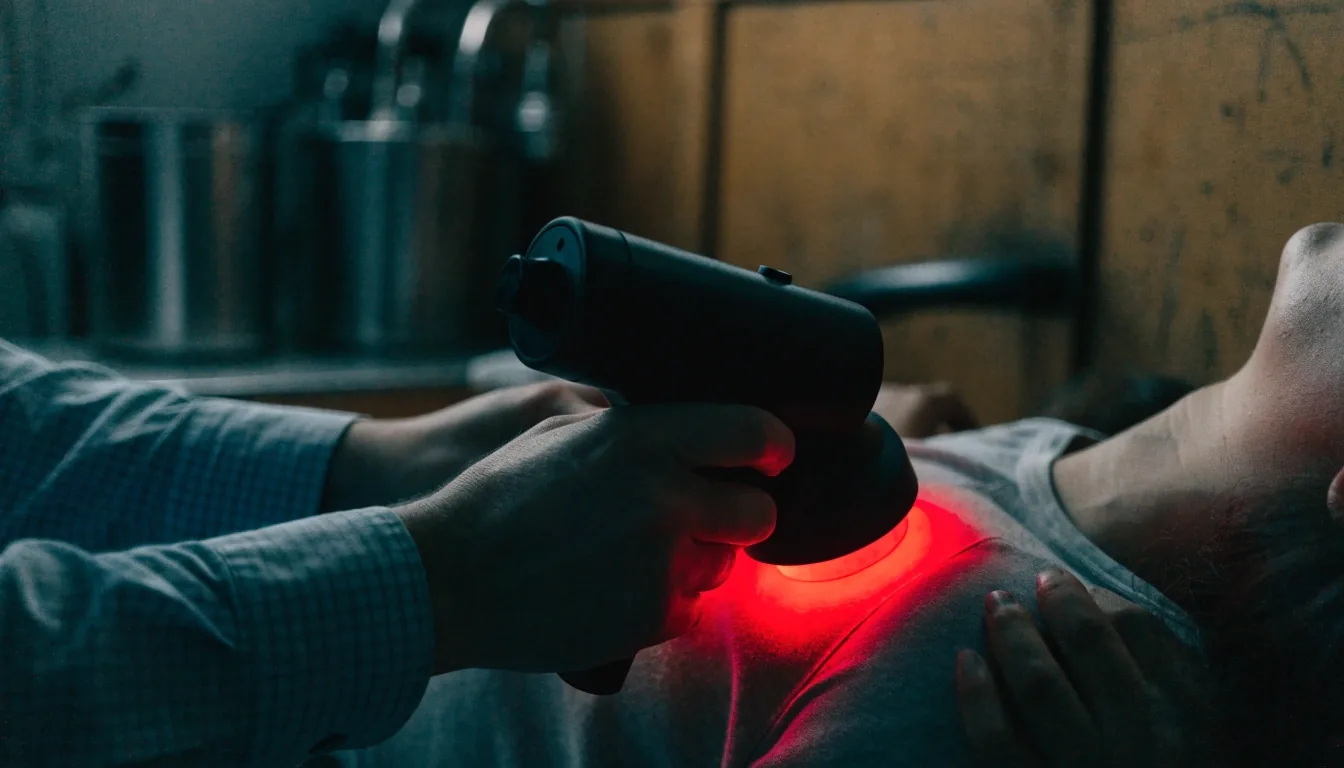
A panel-style infrared device glowing red against a dim bedroom wall at night

Watch for crossover products

Not everything in a red-light roundup is a joint device. The Solawave 4-in-1 Radiant Renewal Skincare Wand shares the handheld shape but serves skincare. TheraBody SmartGoggles shares the recovery budget but targets relaxation. Both are legitimate products in their own lanes — they are just not joint therapy devices, and shape alone will not tell you that.

The tell is never the silhouette. It is the stated intended use. Read that line first, then look at the photograph.

Common mistakes to avoid

Buying by shape is the first mistake. Buying by wattage is the second, since a bigger number does not map to your treatment area. Assuming every red light does the same job is the third, when skincare wands and musculoskeletal devices are separate classes. Slow down on intended use and clearance before you look at anything else.

A fourth mistake is quieter: buying for the person you were in January. Devices reward the routine you already have, not the one you intend to build.

What experienced buyers check first

People who have owned a few devices go straight to the spec sheet. They check whether wavelengths are published, whether the form factor fits their area, and whether the seller states a regulatory pathway. Then they check the routine. Price comes last, because a device that fits your use case beats a cheaper one that does not.

Re-read the guide from the top

When to ask a clinician instead

If you have a diagnosed joint condition, an injury, or ongoing pain, this guide is not a substitute for medical advice. Light therapy devices are marketed for temporary relief and recovery support, not for the treatment of disease. Bring your shortlist to a clinician and ask whether light therapy belongs in your plan at all.

If you would rather ask us first, we will tell you what the listing states and what it does not. We are a comparison site, not a clinic, and we will say so.

Does a clearance claim mean the device will help my joint?

No. A clearance claim tells you a device was reviewed for a stated use; it does not predict what happens in your case. Use it to compare devices on the same terms, then decide with your own clinician.

Is a higher wattage better?

Not on its own. Wattage describes draw, not what reaches the joint. Two devices with the same figure can spread light very differently across the emitter face, which is why published wavelengths and a stated working distance matter more.

Can I use a panel on a single knee?

You can, but you are paying for coverage you are not using. A panel makes sense when the area is large or awkward to reach. For one knee or one elbow, a handheld is usually the more practical tool.

Where does JointLight Compare get its information?

From what sellers publish about their own devices — stated wavelengths, intended use, regulatory pathway and session guidance. We record those statements side by side. We do not test devices ourselves and we do not score them.

Do you sell the devices you compare?

No. JointLight Compare is a comparison site. We do not stock, ship, or service any device on this site, and we take no payment for a listing. When a claim is unclear, we say it is unclear.

Take your shortlist to the table

Compare the devices you are considering side by side on stated use, published wavelengths and regulatory pathway — then decide which lane fits your area and your week.