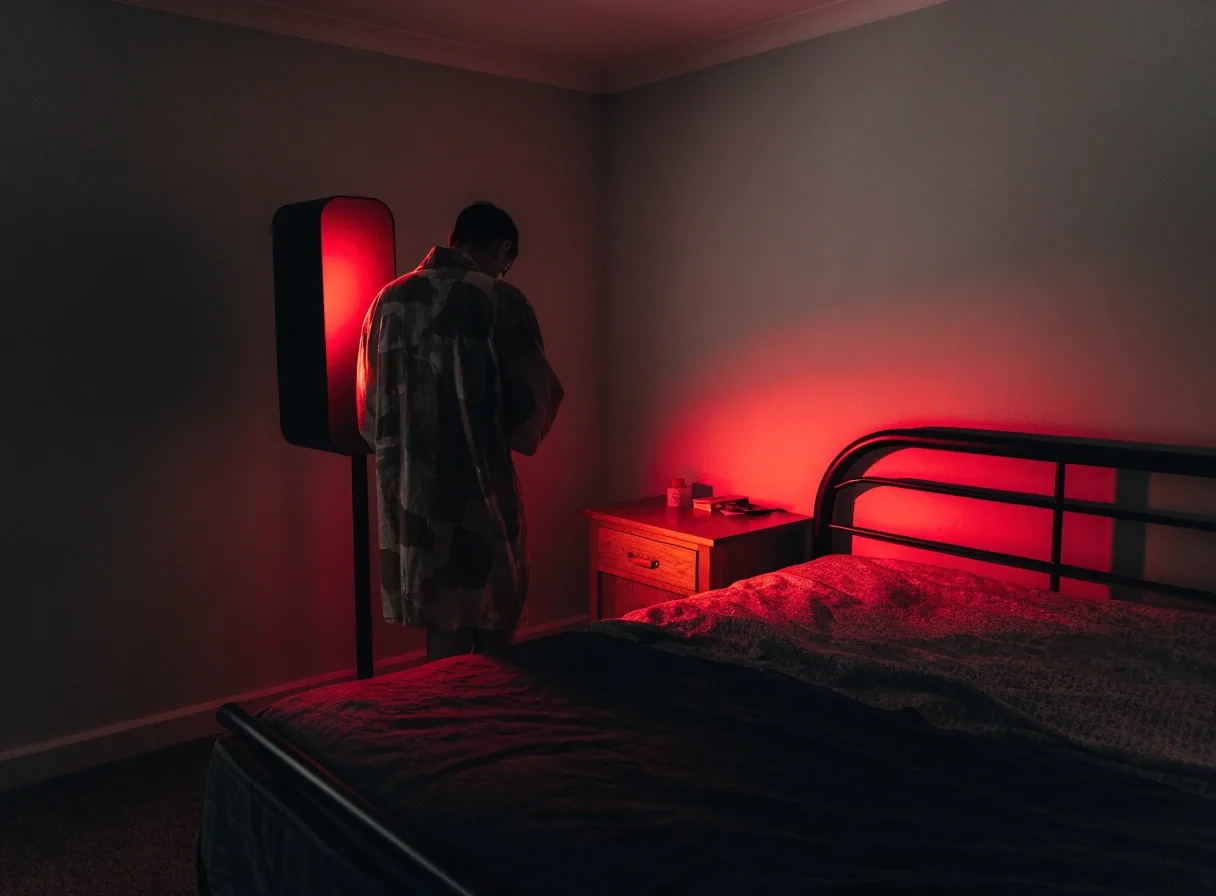
A panel-style near-infrared device leaning against a dim bedroom wall, its red light glowing on the plaster

Panel and lamp red light therapy devices

Stationary LED panels trade portability for coverage — for backs, hips, and knees where a handheld cannot reach the whole area at once.

Form factor: stationary panel Wavelengths: red and near-infrared, stated per device Reach: back, hips, knees, broad zones Session type: standing or seated, one fixed spot

Why panels exist

A panel treats a large zone in one session instead of you moving a handheld across it. That is the entire reason the form factor exists. Panel systems are favored for larger treatment zones such as backs, hips, and knees, and consumer guides regularly distinguish them from handheld wands and belts. Coverage, not power, is the core benefit.

Practically, that means you stand or sit still while the light does the moving for you. A panel removes the repositioning work that makes a handheld session on a lower back feel like a chore — and that difference is what most buyers are actually paying for.

What the form factor buys you

  • A whole back in one pass, without lifting or turning
  • A consistent distance from light to skin across the zone
  • A routine you can repeat the same way every evening
  • Coverage you pay for in space, not in battery weight

The panel category at a glance

Many current products in this niche combine red and near-infrared wavelengths, and panels are often sold with claims around circulation, inflammation, and recovery. That is category-level marketing, and it is worth reading skeptically. The specs that matter are wavelength type, coverage area, and whether a regulatory pathway is stated.

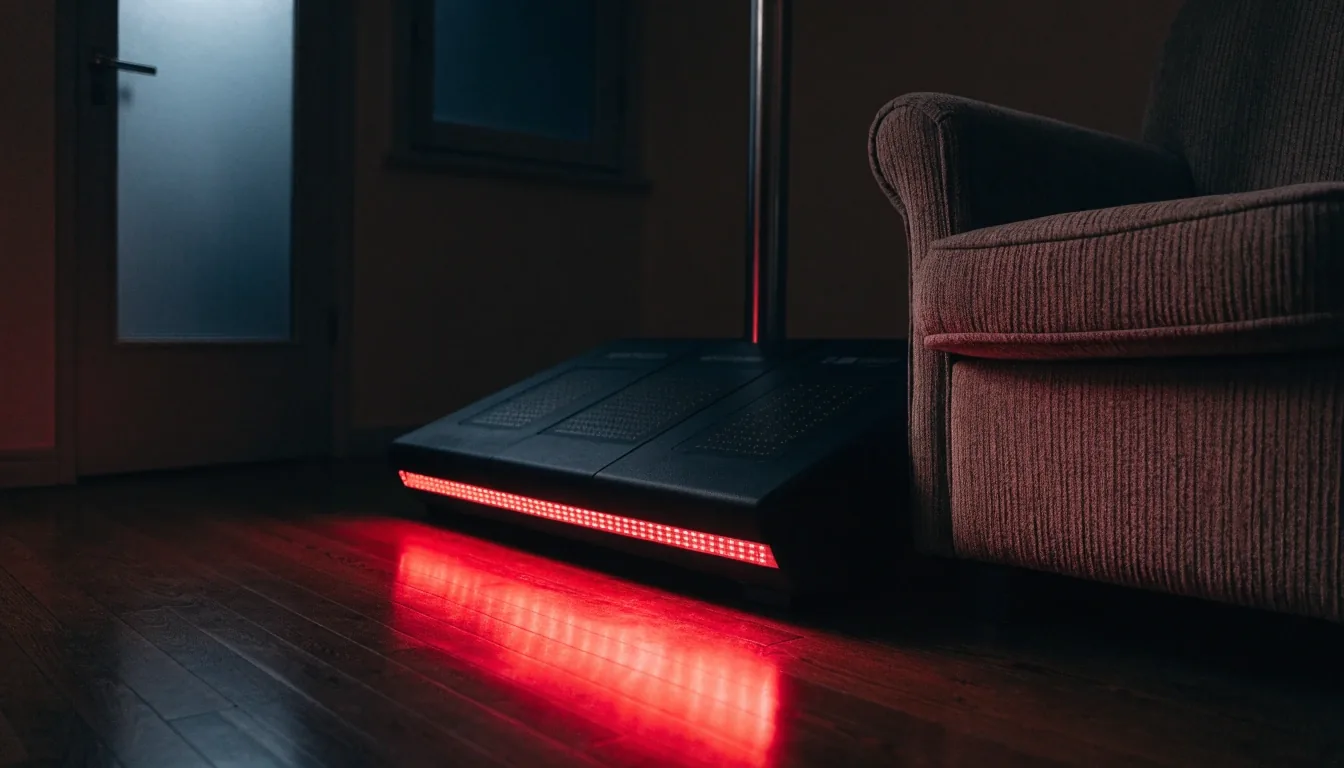
A large LED panel device standing in a dim living room, its face glowing red

Full-body LED panels

Floor-standing panels sized for a whole back or a standing figure. They are the widest coverage in the category and the ones most often described as a fixed home setup. What to check: whether both red and near-infrared wavelengths are stated as figures, the panel's face dimensions, and whether the seller names a regulatory pathway for the device.

Mid-size panels

Hips and knees

A smaller face that still covers a hip or both knees without constant repositioning. Lighter to move around a room than a full-height panel, and often the first size people buy.

Desk and tabletop lamps

One joint at a time

Lamp-style heads that aim at a single joint from a short distance. They sit between a handheld and a panel: more coverage than a wand, far less footprint than a standing unit, and they need a surface to clamp or stand on.

Belt and wrap formats

Worn, not stood beside

Flexible pads that strap over a joint so the light stays in contact. They cover a focused area well, but they are a different purchase from a panel — closer to the handheld family than to a standing unit, and worth reading as such.

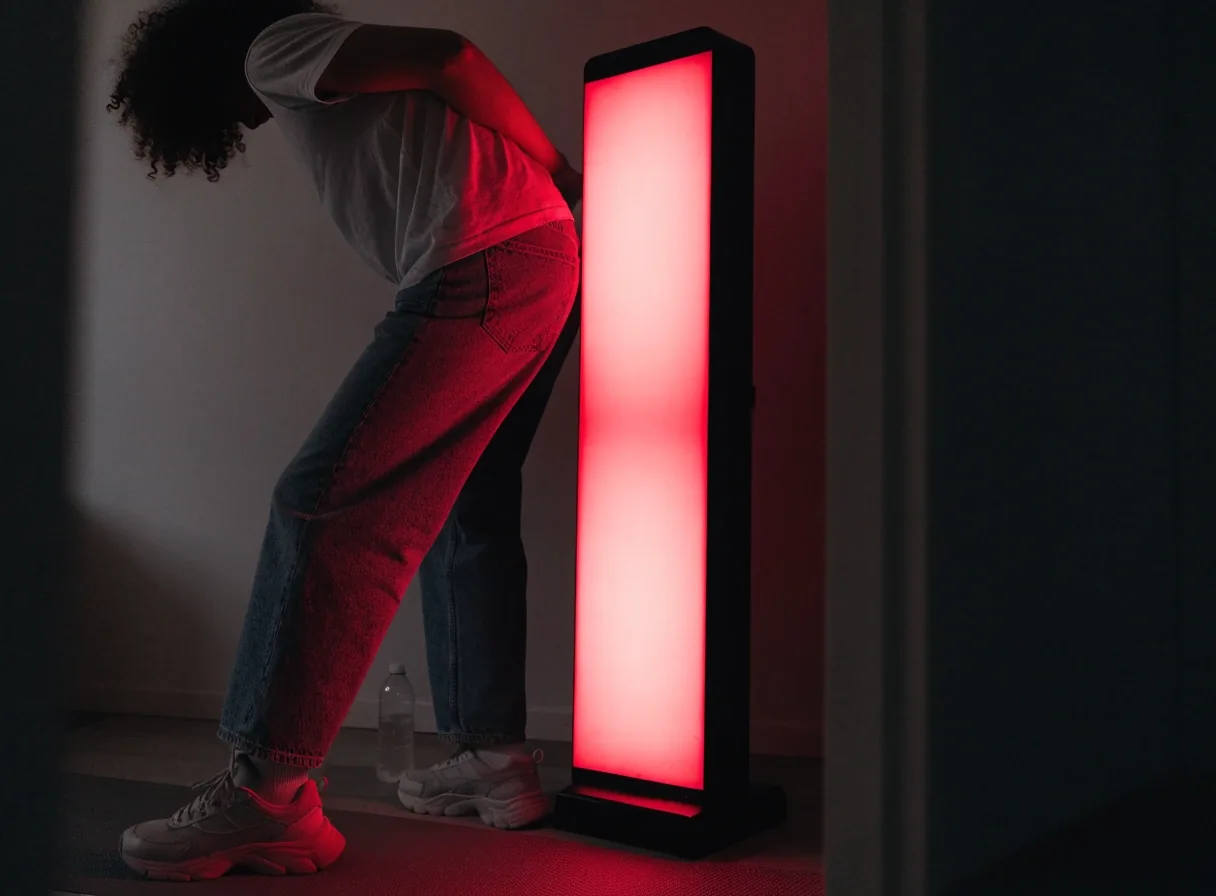
A silhouetted person standing with their back to a glowing wall-mounted panel in a dark room
Coverage in one place, not one joint at a time A panel holds the distance steady while you stand still

Premium home setups: Joovv Solo 3.0 and MitoPRO 1500

Two names come up repeatedly in red-light therapy buying guides. The Joovv Solo 3.0 is associated with home panel-style treatment and is positioned for broader body coverage than a small handheld device. The MitoPRO 1500 is a large panel in the higher-output home tier, usually discussed as a serious fixed setup rather than a grab-and-go tool.

Joovv Solo 3.0

A single-panel home unit built around broader body coverage than a wand. It suits someone who wants one dedicated spot for back and torso sessions and will use it on a routine rather than occasionally.

What to confirm before buying

  • Red and near-infrared wavelengths stated as figures, not implied
  • Face dimensions that match the zone you actually treat
  • Whether a regulatory pathway is named for the device

MitoPRO 1500

A large panel in the higher-output home tier. It is usually discussed as a fixed installation — a place in a room where it lives, not a device you carry between them.

Read the two side by side before deciding which footprint your room can hold.

What a home setup actually requires

Panels need space, a power outlet, and a routine. That is a real constraint, not a footnote. A MitoPRO 1500 or Joovv Solo 3.0 works best in a dedicated spot where you will stand or sit for sessions regularly. If you do not have that space, the panel becomes furniture, and the handheld you skipped starts looking like the better buy.

So measure twice. Walk the room and pick the wall before you pick the model — the panel that fits your routine will get used, and the one that fits only your budget will collect dust in a corner.

Before it arrives

Wall or floor space
Enough room to stand back from the face, plus clearance to step in and out.
A reachable outlet
A cord that reaches without an extension lead trailing across the room.
A time you will keep
The same window most evenings beats an ambitious schedule you abandon in week two.

Panels versus handhelds: the honest tradeoff

A handheld treats a knee in five minutes anywhere. A panel covers a back properly but ties you to one room. Neither is superior in the abstract. If your problem area is broad and stationary, a panel earns its footprint. If it is a single reachable joint, a handheld does the job at a fraction of the commitment.

Where a panel wins

  • Whole-back and torso sessions in one pass
  • Consistent distance without holding anything
  • A repeatable routine in one fixed spot

Where a handheld wins

  • Use anywhere, including travel
  • Focused light on one reachable joint
  • No dedicated space or standing routine

How to decide

Name the zone first. Broad and stationary points to a panel; a single joint you can reach points to a handheld. Then check the space you can give it, not the spec sheet's ambition.

Reading panel specs without overreading them

Higher output sounds better and often is, but output without published wavelengths tells you little. Check that red and near-infrared figures are stated, not just implied. Then check coverage dimensions against your actual treatment area. A large panel is wasted on a wrist, and an undersized one frustrates a lower back.

Panel and lamp red light therapy devices compared by form factor, wavelength, coverage, session type, and stated regulatory pathway
Device type Wavelengths to look for Coverage Session type Stated regulatory pathway
Full-body LED panel Red and near-infrared both stated as figures Whole back or standing figure Standing, one fixed spot Seller should name one; if none is named, treat it as unstated
Mid-size panel Same check: both figures published, not implied Hips, knees, lower back Seated or standing Ask the seller directly before ordering
Desk or tabletop lamp Check the stated pair before assuming infrared coverage One joint at a time Short, seated sessions Often left unstated on small lamps
Handheld wand Usually one stated figure, sometimes two One reachable joint Held, five minutes anywhere Varies widely; read the listing closely

A comparison is only as useful as the facts behind it — if a listing does not state a figure, that gap belongs in your decision.

Where panels sit in the wider recovery market

Panels compete with recovery wearables for the same buyer budget. TheraBody SmartGoggles appears in major wellness-device comparisons as a smart wearable targeting tension relief and relaxation, not joint therapy. If you are weighing a panel against a wearable, decide whether you want light exposure on a specific area or general relaxation, because those are different purchases.

Light on a target area

A panel aims light at a named zone — a back, hips, knees. You choose the area, you stand in front of it, and the session is about that spot.

This is the panel family and the reason people give up a shelf or a corner of a room for it.

General relaxation

A wearable like the TheraBody SmartGoggles is aimed at tension relief and relaxation. It is a comfort purchase with a different job from a therapy light.

Nothing wrong with that — it just is not the same decision as picking a panel size.

One budget, one choice

If you want light on a specific joint, a wearable will not do it. If you want to unwind, a panel is the wrong shape for the job.

Choosing between panel sizes

Size should follow your treatment area, not the spec sheet's ambition. A mid-size panel handles hips and knees; a large one handles a full back. Buying bigger than your area means paying for coverage you will never use. Buying smaller means repositioning constantly, which is the problem panels were meant to solve.

A simple test before you order: stand where the panel will live and mark the area you want lit. If your mark is narrower than your shoulders, a mid-size unit is the honest match. If it runs shoulder to hip, you are in full-body panel territory.

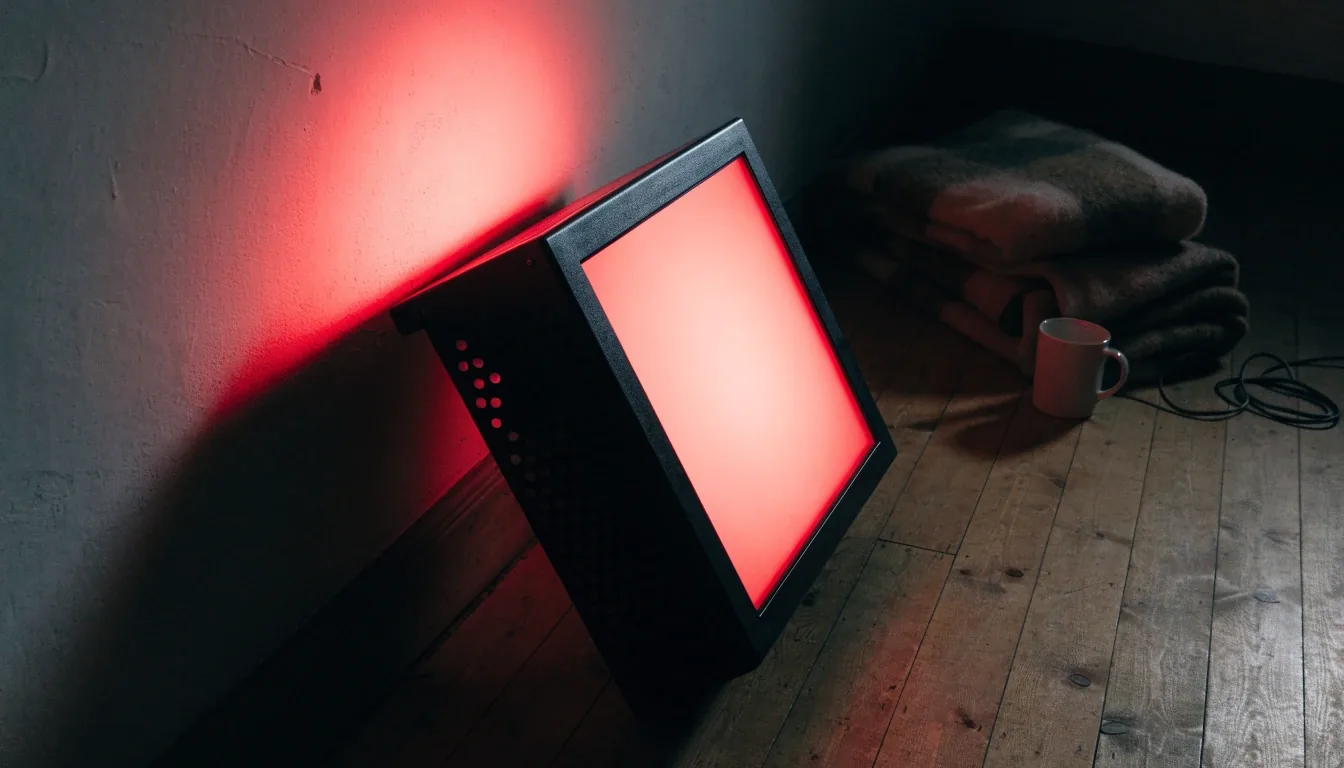
A mid-size near-infrared panel on a wooden floor, its red light washing up the wall

Size follows the zone. A mid-size face covers hips and knees without being moved mid-session.

A tall full-body LED panel standing against a wall, its face lit red

Full-body panel. Shoulder-to-hip coverage in one standing session.

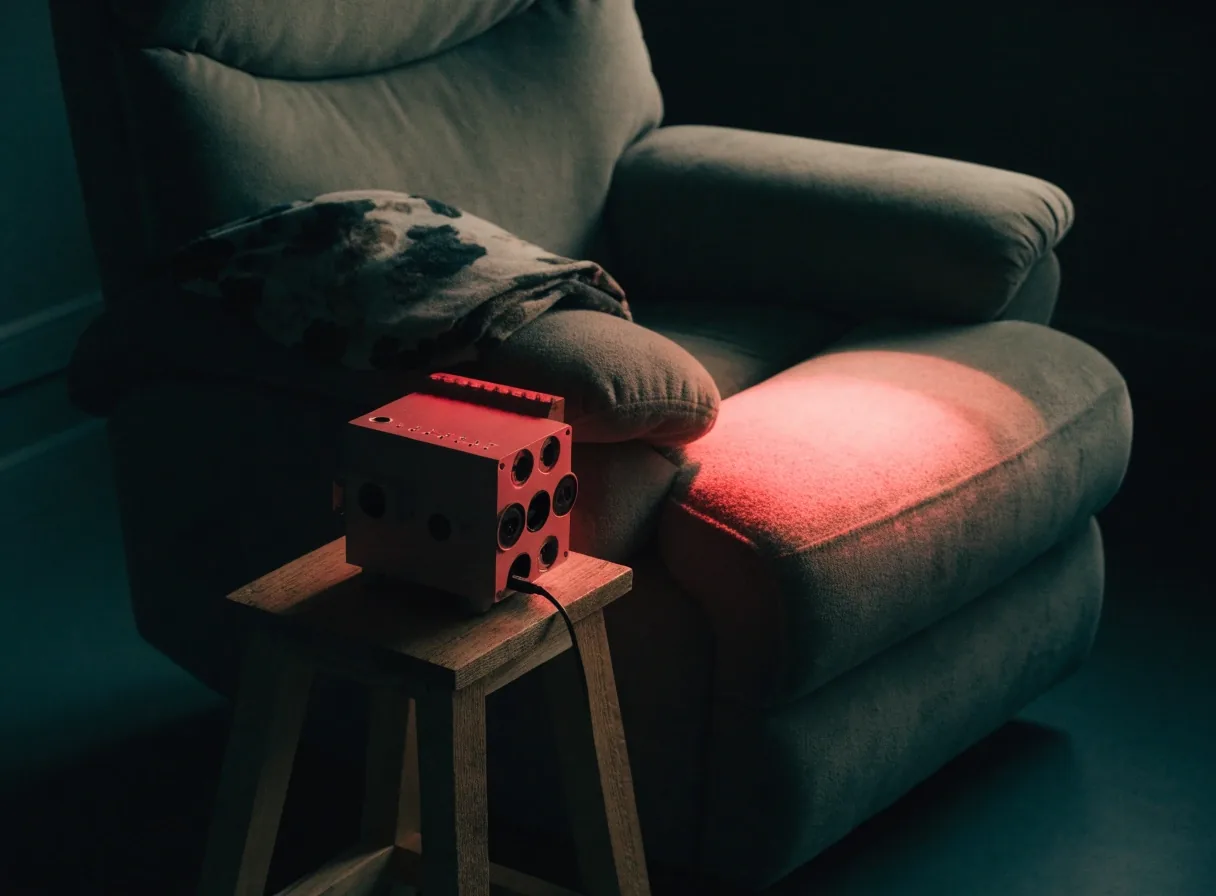
A small lamp-style red light head aimed at an empty armchair in a dim room

Lamp head. Aimed at one joint from a short, seated distance.

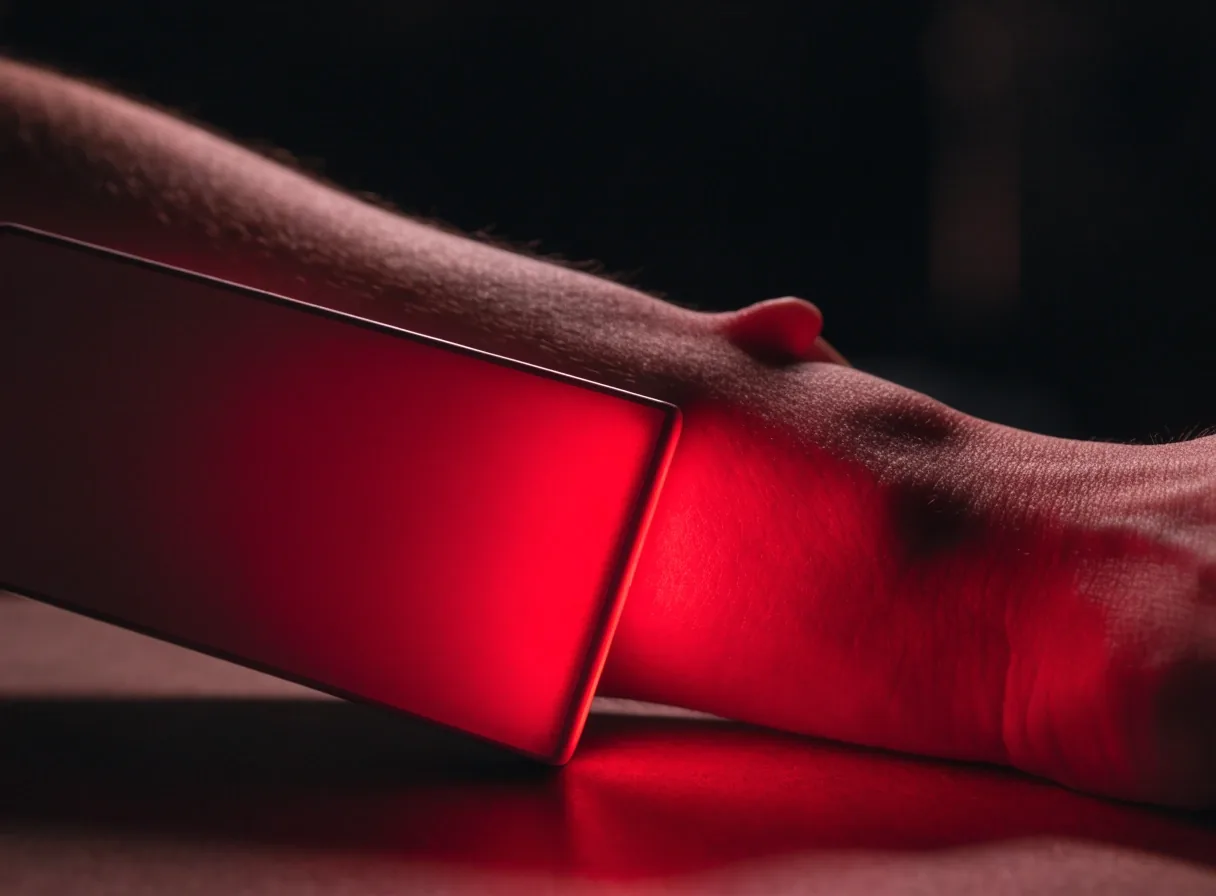
A close view of a red-lit device edge resting against a forearm on a dark table

Close range. How the light actually falls on skin at arm's length.

Questions before you buy a panel

The short answers cover the decisions most buyers get stuck on: coverage, wavelengths, space, and how panels differ from the handhelds in the rest of the catalogue.

How much space does a red light therapy panel need?

Enough room to stand back from the face and step in and out, plus a reachable outlet. Full-body panels need a wall or a floor corner; mid-size panels fit beside a chair or a sofa. If that space does not exist in your home, a handheld is the more honest purchase.

What wavelengths should a panel list?

Look for red and near-infrared figures stated as numbers, not described only as a general claim. A listing that implies infrared coverage without naming a figure gives you nothing to compare against the next device on your list.

Is a panel better than a handheld for knees?

For both knees at once, a mid-size panel is easier than holding a wand and moving it. For one knee you can reach comfortably, a handheld does the job with far less space and commitment. Neither wins in the abstract — the zone decides.

Does a bigger panel mean a better session?

Only if you treat a zone that size. A large panel aimed at a wrist covers an area you never use, and you paid for that coverage in space and weight. Match the face to the zone, then compare wavelengths and stated regulatory pathway.

How do I compare panel devices side by side?

Start with the comparison table on this site, which lines up form factor, wavelengths, coverage, session type, and whether a regulatory pathway is stated. Then read the individual device notes before ordering. If a listing leaves a field blank, treat that blank as part of your decision.

Pick the panel that fits the room you actually have

Compare panel devices across wavelengths, coverage, and stated regulatory pathway — then ask us anything the listings leave out.

An empty room at night with a panel-style device glowing faintly beside a wooden chair
JointLight Compare — panel and lamp devices Zmaja od Bosne 12, 71000 Sarajevo, Bosnia and Herzegovina Monday to Friday, 9:00 AM – 6:00 PM Contact Privacy Policy