

Handheld infrared and red light devices
They treat a spot, not a body. Here is what handheld units are good at, where they fall short, and how to read the specs before you buy.
What handheld devices are built for
A handheld unit is designed for close-range use on joints and muscles you can reach directly. Knees, elbows, shoulders, wrists, and small muscle groups are the natural targets. You hold it against the spot and let the red and near-infrared light do the work at the surface.
The dpl Clinical XL Pain Relief sits at the premium end of this group, marketed for everyday aches, exercise recovery, and chronic conditions such as arthritis. Consumer wands copy the shape at a lower spec, and that gap is what the rest of this page helps you see.
Reachable joint zones
- Knee, held steady along the inner and outer edges
- Elbow, where the joint sits close to the skin
- Shoulder and wrist, worked from more than one angle
- Small muscle groups around the joint, not whole limbs
If your joint is not on this list because you cannot comfortably reach it, a handheld is probably not your form factor.
The clinical end of the category
Not every handheld light is a wellness gadget. The CURAPOD is described in a 2026 clinical study as a noninvasive device for musculoskeletal pain, using visible red and infrared light, compact and self-administrable, with seven LEDs noted in the study description.
That is a different tier from a generic wand, and the difference is documented rather than claimed. When you compare handheld devices, this is the kind of evidence to look for: a named study, a stated population, and a description of the device that a reader can check.
Documented vs. asserted
A study description tells you what was tested and how the device was built. A marketing line tells you what the brand hopes you will assume. Both can appear on the same product page, so read them separately.
The claim to weigh is not how strong the light is, but who checked the device and wrote it down.
Where the wand format gets confusing
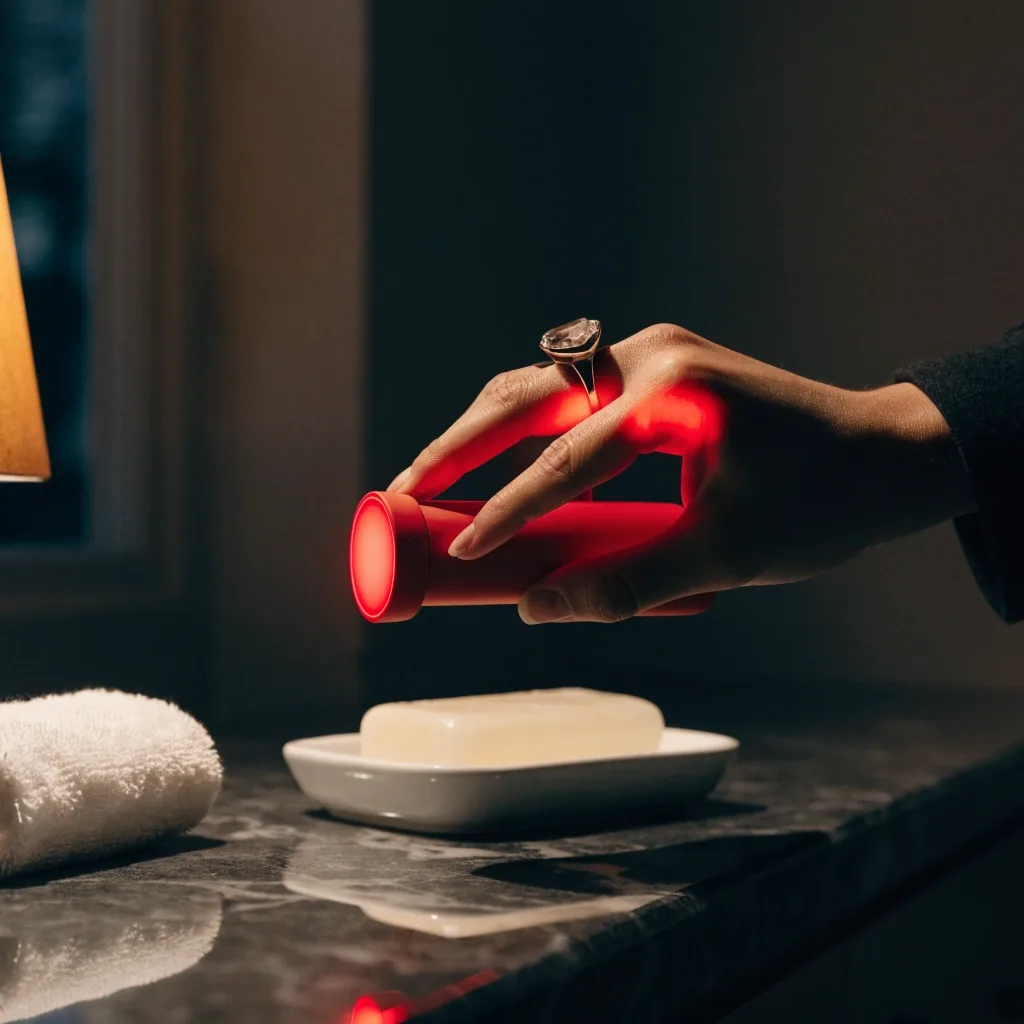
The Solawave 4-in-1 Radiant Renewal Skincare Wand is a handheld light wand that shows up in red-light device roundups, but its purpose is skincare. It shows how much the category overlaps by shape alone. If you are shopping for a knee, a skincare wand is the wrong row entirely, even though it looks like the right one.
Before you buy, read the intended use line. It is usually short, and it is the fastest way to tell a joint device from a face device.
Wavelengths in handheld units
Red and near-infrared are the two wavelengths you will see most, often combined in one device. The Lumaflex Body Pro is built around red and near-infrared light therapy and markets portability as a core benefit. Some brands publish exact figures, others do not.
Visible red
The wavelength you can see as a warm glow on the skin. It is the one most often named on consumer packaging and the one buyers recognise first.
Near-infrared
Invisible to the eye, which is why a device can look unlit while it is still running. If a brand lists both, check whether the figures are separate or a single combined number.
Unpublished output
An unpublished wavelength is worth flagging, because it leaves the device's actual output undefined. You are then comparing on marketing alone, which is a weak basis for a purchase.
How three handheld devices line up
Same form factor, three different jobs. This is the short version of the comparison; the full table carries the same columns for the rest of the market.
dpl Clinical XL Pain Relief
- Positioning
- Premium end of the handheld group
- Stated use
- Everyday aches, exercise recovery, arthritis
- Regulatory
- States FDA clearance and a use case
CURAPOD
- Positioning
- Clinical end of the category
- Stated use
- Noninvasive musculoskeletal pain
- Regulatory
- Study documentation, seven LEDs described
Solawave 4-in-1 Radiant Renewal Skincare Wand
- Positioning
- Skincare, not joint therapy
- Stated use
- Facial skin, not knees or shoulders
- Why it is here
- Shows how the shape misleads
At-home use: the routine question
Handheld devices win on routine. They live in a drawer, work without setup, and take minutes per session. That matters more than raw power for most buyers. A device you pick up daily does more for at-home recovery than a panel you use twice a month, and the compact form factor is the reason, not the marketing around it.
A workable session pattern
- 1. Clear the area of clothing and check the skin is dry and intact.
- 2. Hold the device against the joint at the distance the manual states, usually close to the skin.
- 3. Move around the joint rather than holding one spot for the whole session.
- 4. Follow the session length in the manual, and stop if the skin feels uncomfortably warm.
What the routine costs you
- A few minutes per joint, per session
- No setup, no dedicated space, no chair
- Charging becomes the only real maintenance
The device you actually pick up is the one that fits into an ordinary evening.
What handheld devices won't do
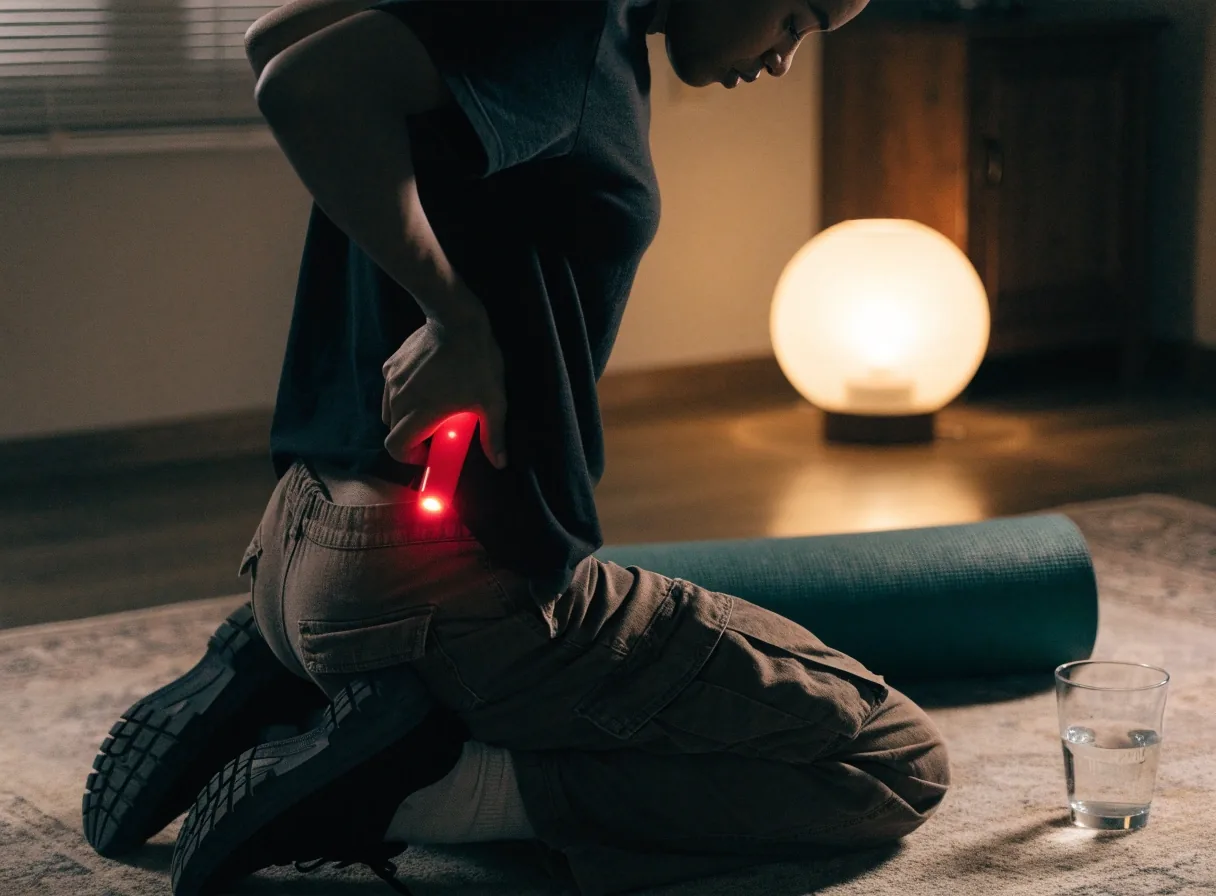
They will not cover your whole back, and they will not treat multiple joints at once without you moving the device around. Coverage is the real limitation. If your main complaint is a broad area such as hips or lower back, a handheld is the wrong form factor, and no amount of session time fixes that.
Which problem do you actually have?
- One reachable joint, used often: a handheld fits.
- Broad hips or lower back: a panel or lamp fits better.
- Several joints in sequence: expect to move the device between them.
Spotting a device worth comparing
Three things separate a serious handheld from a shelf-filler: published wavelengths, a stated regulatory pathway, and a clear intended use. The dpl Clinical XL states FDA clearance and a use case; the CURAPOD has study documentation. A device that states none of these is not automatically bad, but you are comparing on marketing alone.
| Check | What good looks like | What to do if it is missing |
|---|---|---|
| Wavelengths | Red and near-infrared figures listed separately | Treat the output as undefined and weigh the rest of the page accordingly |
| Regulatory pathway | A named clearance or a study description with a population | Ask the brand, or check the regulator's own public listing before you buy |
| Intended use | A short line naming joints and muscles, not skin | Assume it is the wrong device for a knee and keep looking |
| Session guidance | A stated session length and distance from the skin | Without it you cannot compare routines between two devices fairly |
How handheld devices fit the wider market
Handheld units
Targeted, mobile, frequent use. They reach a single joint, travel in a bag, and fit a few minutes in an ordinary evening. Coverage is limited by how far your arm can reach.
Panel and lamp systems
Broad, stationary coverage. They suit hips, lower back, and larger areas, but they need a place to stand and a reason to be part of the day. Consumer guides separate the two groups for exactly this reason.
They solve different problems, so knowing which problem you have is the whole decision. If you are not sure yet, the buying guide walks through the questions in order, and the reviews page shows how individual devices hold up against the same set of checks.
Questions before you pick one
Can a handheld device replace a panel?
No, they cover different areas. A handheld reaches one joint at a time; a panel covers a broad area without you holding anything. If your main area is your lower back, a panel is the more sensible shape.
How long does a session take?
Session length is set by the manufacturer and printed in the manual. Follow the manual for your device rather than a generic number from a roundup, because the guidance varies between models.
Does near-infrared light look different from red?
Near-infrared is invisible, so a device can appear dim while it is running. Visible red shows as a warm glow on the skin. A device combining both may look different from a red-only unit and still be working.
Should I use one over an open wound or a numb area?
No. Broken skin and areas with reduced sensation are reasons to check with a clinician first, because you may not feel heat building up. The manufacturer's manual lists its own cautions and those come first.
How do you decide which devices appear here?
We group handheld units by the checks on this page: published wavelengths, stated regulatory pathway, and a clear intended use. Devices with none of the three are still listed when readers ask about them, but they are marked as marketing-only in the comparison table.
Next step: compare before you buy
Put the handheld units side by side on wavelengths, intended use, and regulatory status. If a device you own is missing from the table, tell us and we will look at it.